The heart of the series. When you actually read the surviving latter half of the engi, no ogre appears even once. The one who was there was a human, from the neighboring land. First, the kamishibai. After that, we’ll trace the original text. This is a [Written Record + Theory] installment.
Kamishibai — The Human’s Tale
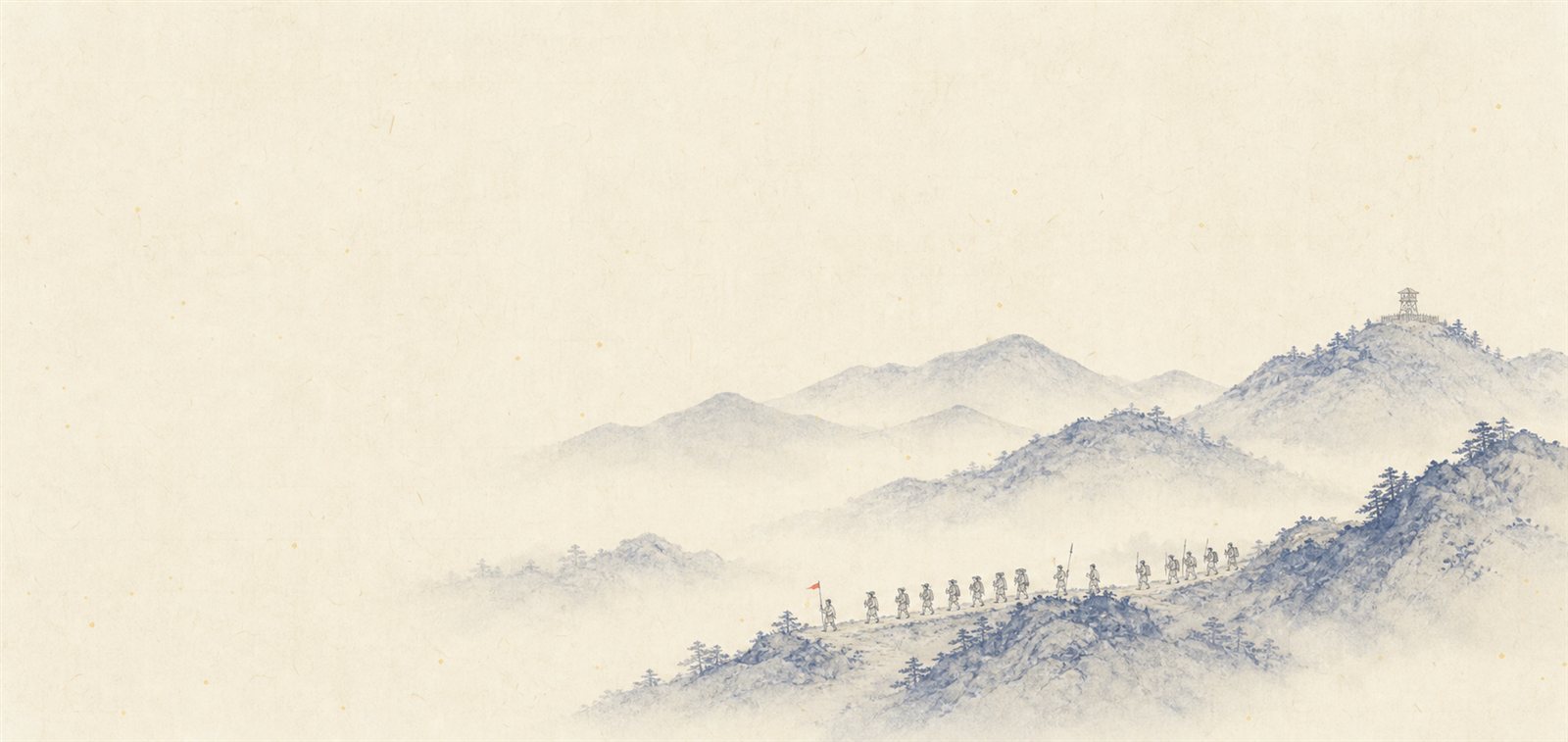
Long ago, the sovereign had a consort named Kuwashi-hime. Longing for the sovereign, the princess made a long journey from the capital in Yamato all the way to this land of Hōki.
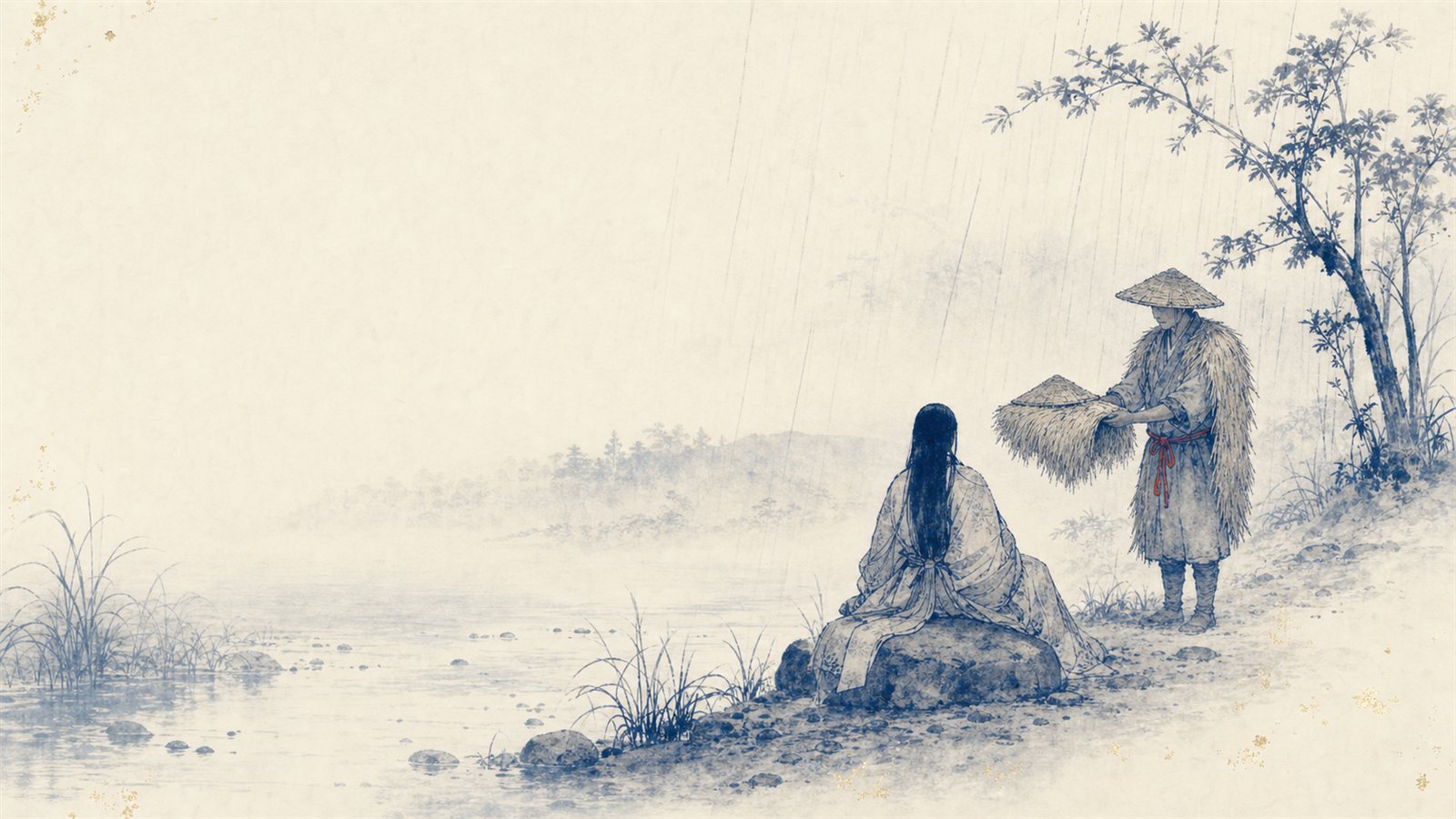
It was the season of the early-summer rains. To the princess resting on a stone by the river, a villager quietly offered a sedge rain-cape and hat.
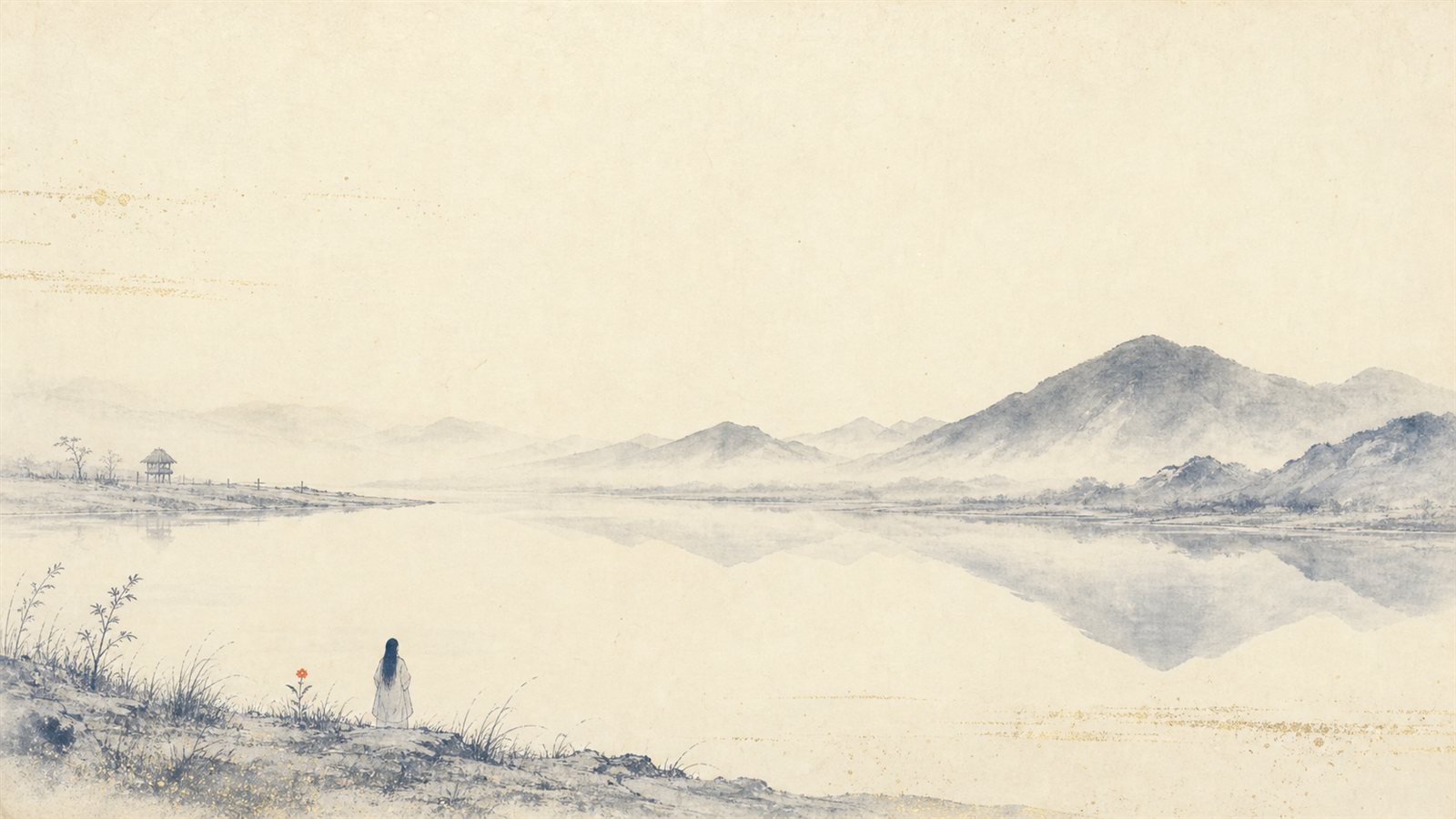
When the princess complained that the river was too loud, strangely, the sound of the water ceased. That river is still called the Otonashi (Soundless) River.
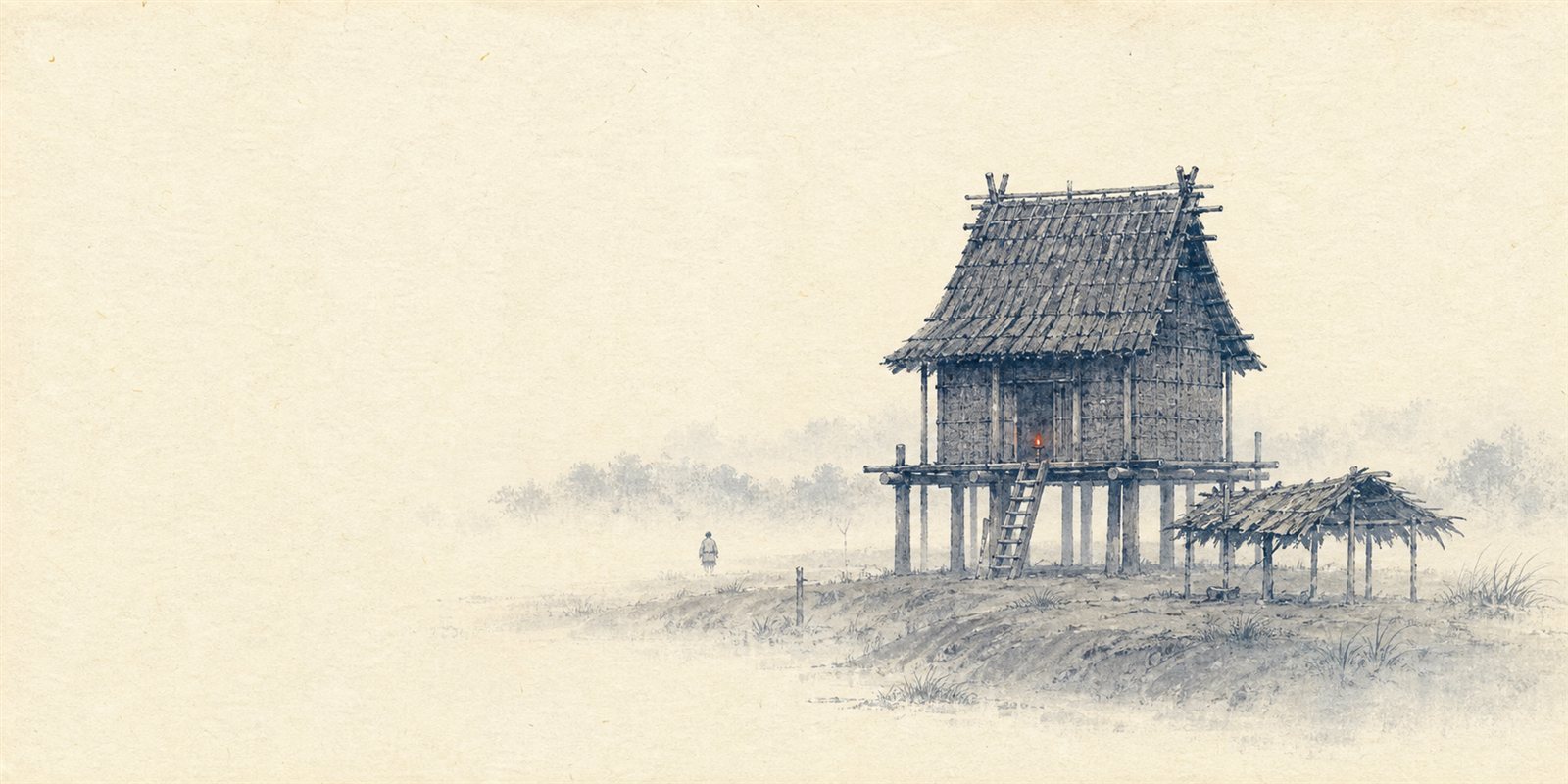
The sovereign and the princess made their palace in the village beside Kanbe. They raised posts, roofed it with tree bark, and the attendants sheltered from rain and dew under leaves.
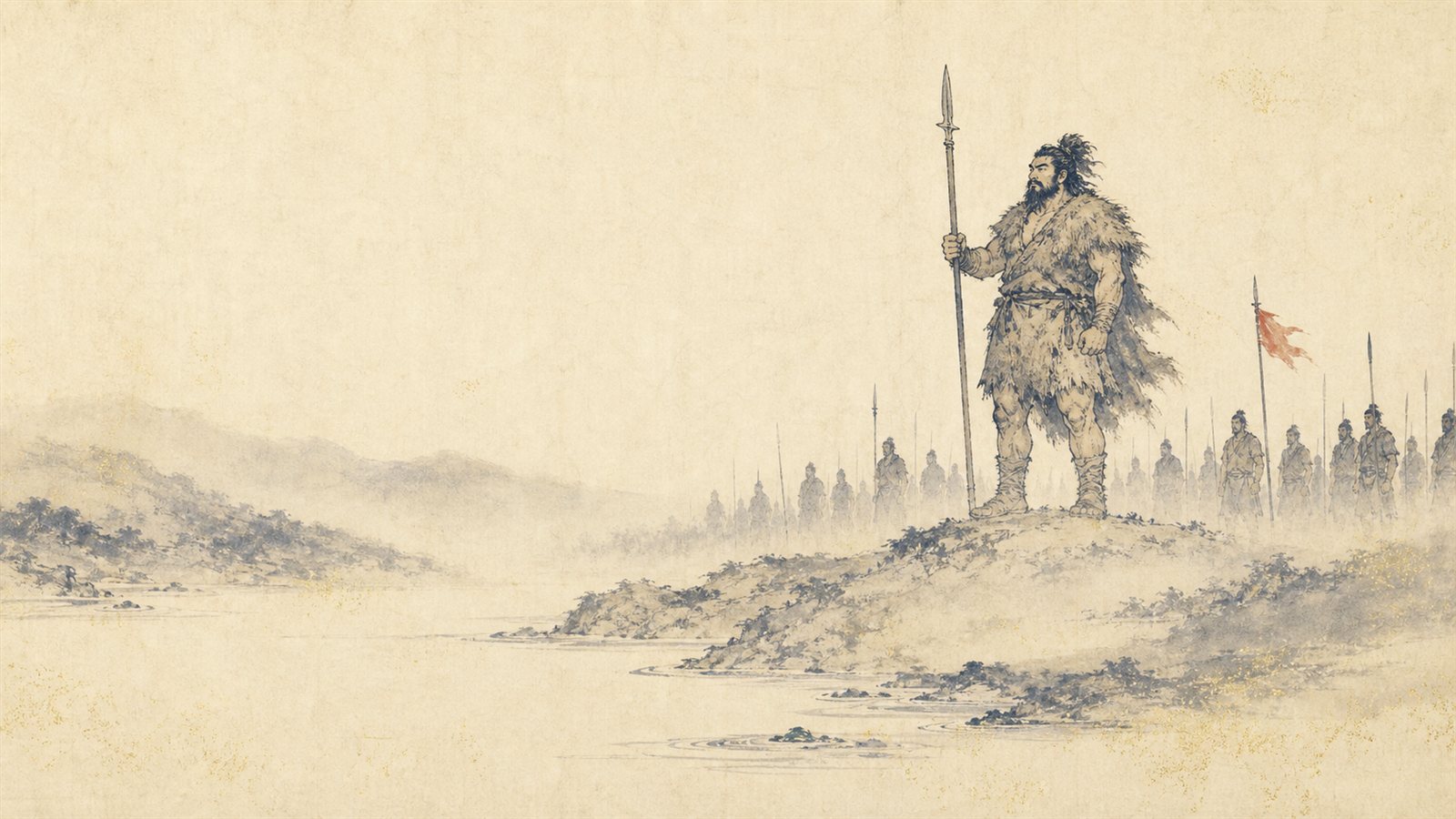
Around that time, in the land of Bitchū, there was a man of immense strength named Ishiga-no-Hitogo-no-Kami Arahito. Not an ogre. A human. The man raised troops and meant to attack the sovereign.
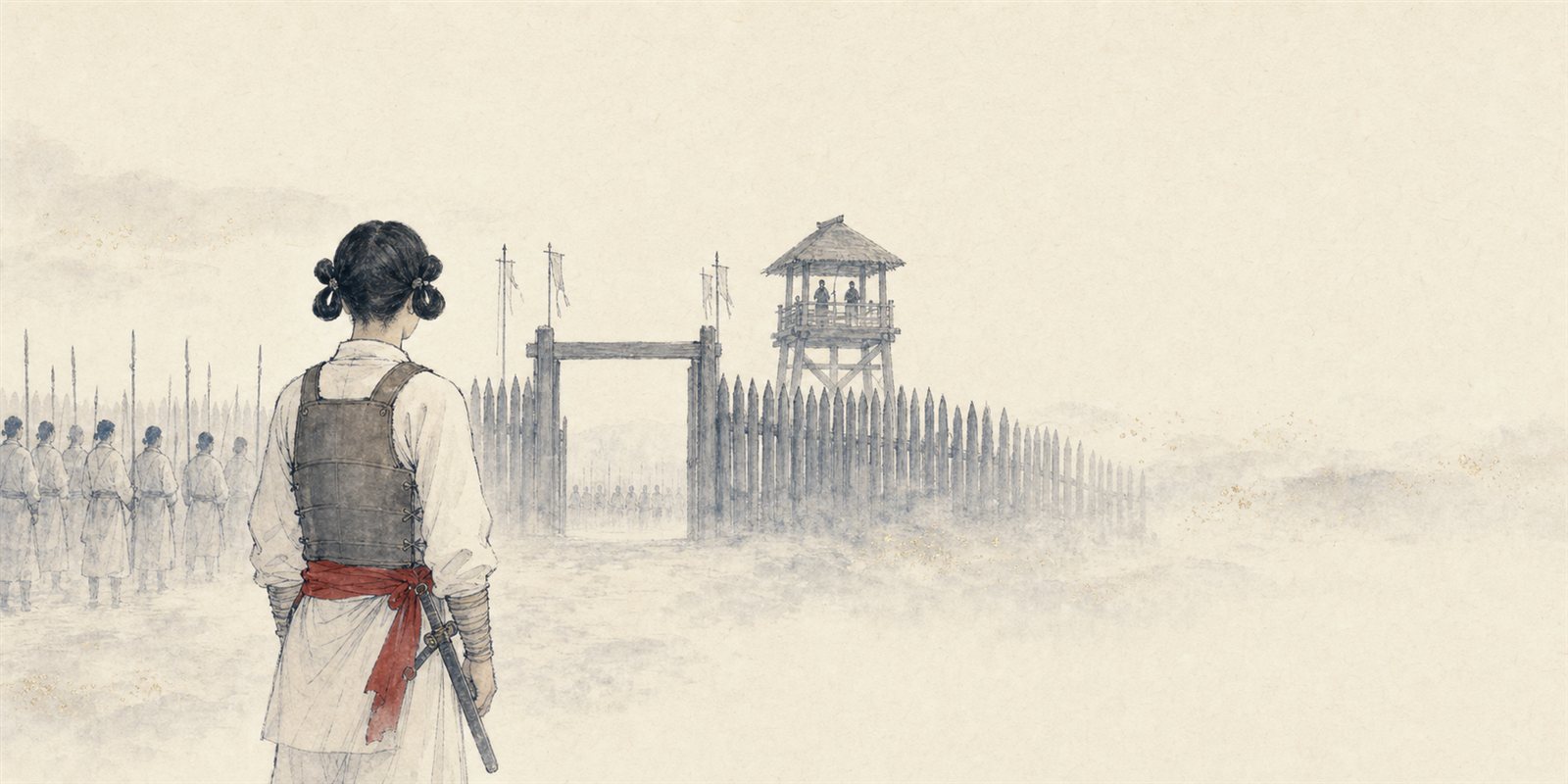
Meeting him was the valiant Black-Toothed Prince. He set a barrier at Kasumi-ga-sato and made ready in silence.
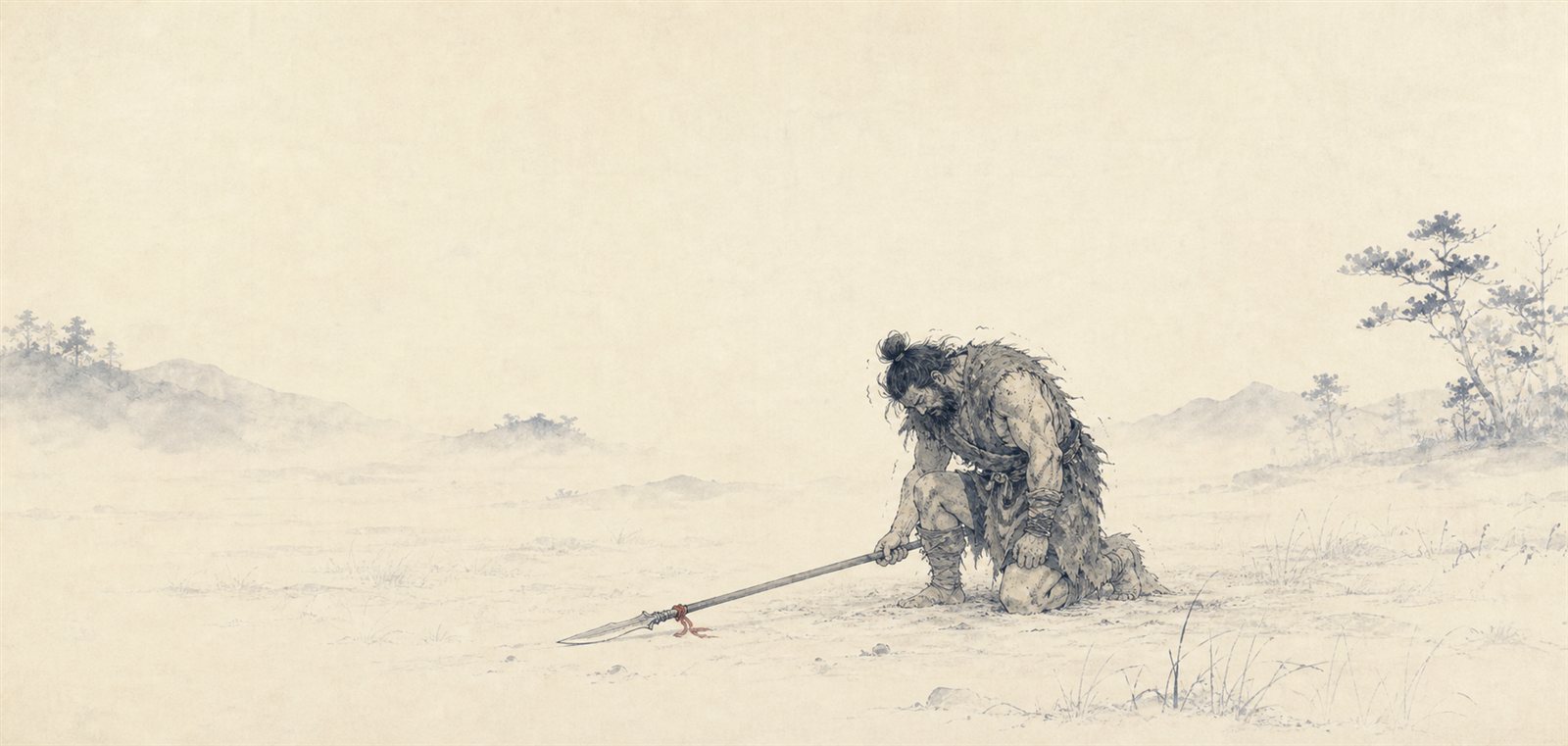
But — merely on hearing that the prince had taken the field, Ishiga Arahito’s limbs trembled, and he could not fight.
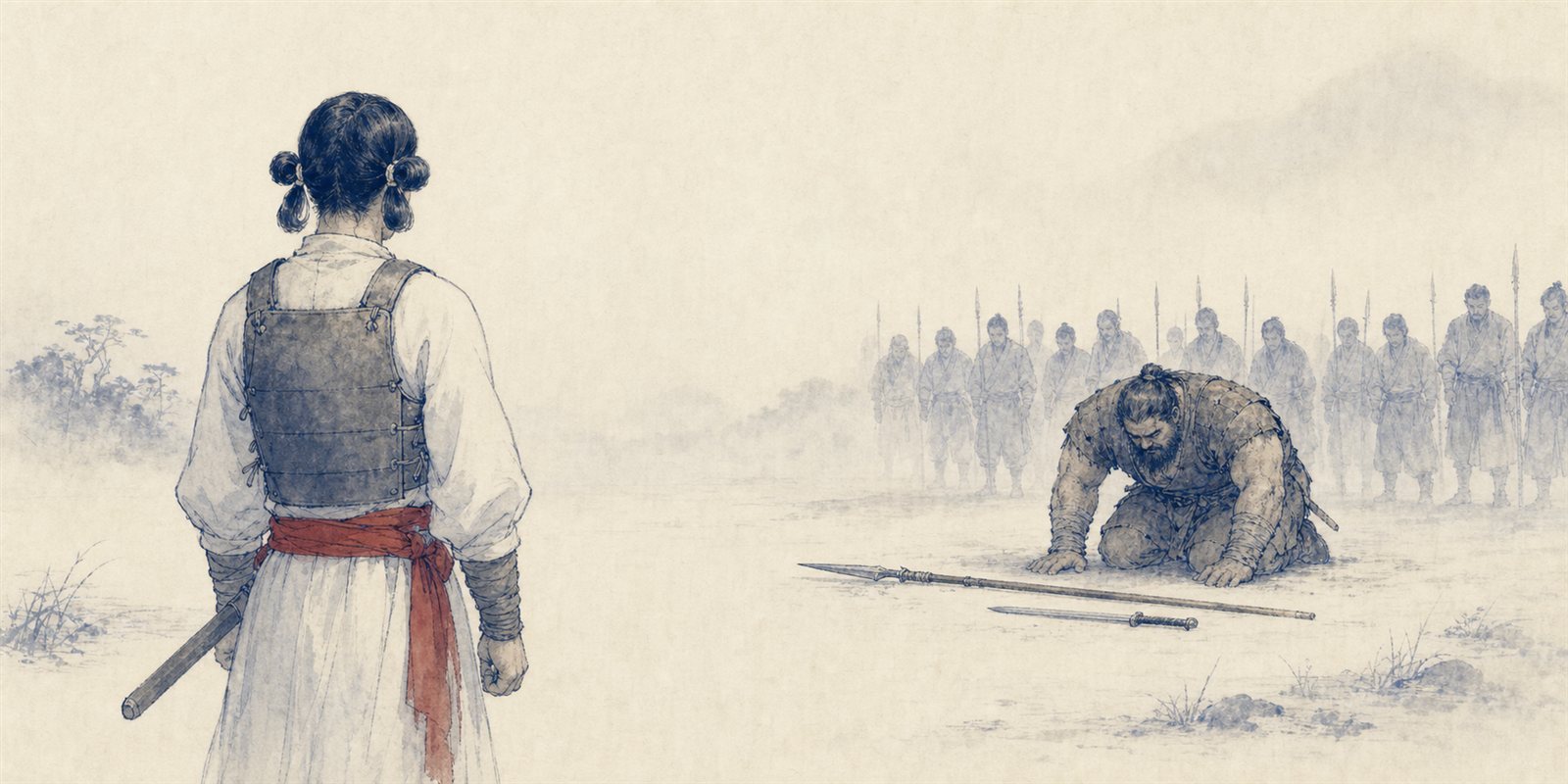
He laid down his arms and armor, opened his ranks in surrender, and became the prince’s retainer just as he was. Here too, the enemy is not destroyed — he becomes an ally.
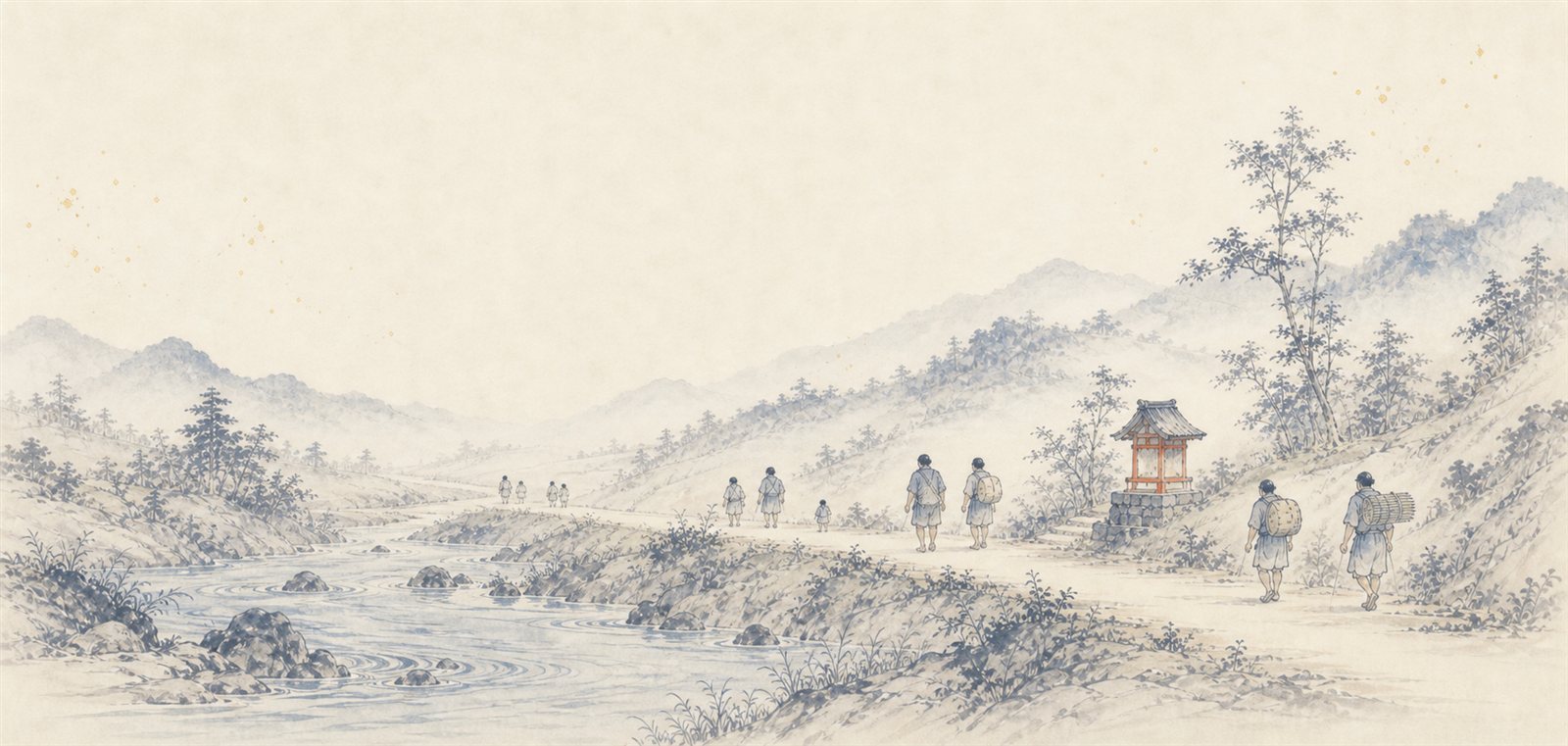
The battle never happened. Along this pass road where the strife had settled, the villagers came and went in peace.
—This is one of the three tales handed down at Mt. Kizumi.
From here, the sources, and some thinking
As I wrote in the prologue, the engi of Sasafuku Shrine lost its first half, and only the latter half survives in print in the Hino-gun-shi. The protagonist of that latter half is not an ogre but the empress.
What was written in the surviving half
Kuwashi-hime, consort of Emperor Kōrei, journeys all the way from Yamato to Hōki, following the emperor. In the early-summer rains, a villager offers a sedge cape and hat to the empress resting on a stone by the river. When the empress speaks of the river being too loud, the water’s sound stops — and that, the engi says, is the origin of the name Otonashi River (the Soundless River). Origin tales of place-names are woven all through the story.
The emperor and empress then set their palace at a place called “Kuramoto-shiki” in the village beside Kanbe. They raised posts, roofed it with tree bark, and the attendants sheltered from rain and dew under leaves. A plain description, with an oddly tangible sense of daily life.
Not an ogre, but a man of the neighboring land
The story moves from here. The engi continues: “Around that time, in the land of Bitchū, there was one called Ishiga-no-Hitogo-no-Kami Arahito. The strongest in the land.”
Ishiga-no-Hitogo-no-Kami Arahito, a strong man of Bitchū Province (now western Okayama). Not an ogre. A human. He raises troops to attack the emperor. Meeting him is the valiant Black-Toothed Prince, who sets a barrier at Kasumi-ga-sato and makes ready.
The ending was no battle at all. “He laid down his arms and armor, surrendered at the gate, and joined the ranks beneath the prince.” Merely on hearing the prince had come out, his limbs trembled and he could not fight — so he surrendered, and became a retainer just as he was.
Here too. In the ogre’s tale, in the prince’s tale, and in this oldest document, the enemy is not destroyed; he yields, and becomes an ally. Three tales that contradict one another agree unanimously on this one point alone. This, perhaps, is the memory that lies deepest in the tradition.
The thread of “crab” — [Theory]
By the way, did you notice?
- The enemy in the oldest document: Ishiga (stone-crab) Hitogo (a strong man of Bitchū)
- The enemy in the Edo gazetteer Hōki-shi: the crab chieftain of Bitchū
- The ogres’ names: Ōushikani (great-ox-crab) · Otoushikani (lesser-ox-crab)
There’s a “crab” in all of them. And in Bitchū — in the city of Niimi, Okayama — a place actually named Ishiga exists.
From here it’s conjecture, but it can be read this way. Long ago there was strife between the powers of Hino and the Bitchū side, and eventually they reconciled. As that memory was handed down, the “chieftain of Ishiga” turned into “an ogre bearing the name of crab.” Among researchers, there has been a theory for a hundred years now reading this ogre-slaying as a local version of the Kibitsuhiko legend in the Nihon Shoki (the same lineage as the original Momotarō). There’s even a theory reading the shrine name “sasafuku” as “sasa = iron sand, fuku = the bellows of the tatara” — and if so, beneath this story’s feet lies the iron of the Hino River.
Fact becomes story. The ogre may have been someone’s neighbor all along.
That the three tales end the same way — [Speculation]
This far is the line you can trace from record and theory. From here on is just my own idle thinking. Read it not as right or wrong, but as something that’s fun to think about.
As I wrote in the prologue, the three tales come from scattered sources. The ogre’s tale, the prince’s tale (the Shin family chronicle), and this human’s tale (the latter half of the engi). The source is not one.
And yet, all three end the same way. The ogre yields and guards the north, the evil ogres yield to the last, and Ishiga the crab-chieftain of Bitchū surrenders and becomes a retainer. They do not destroy the enemy. They make him yield, and make him an ally. The sources differ, yet only here do they align. This doesn’t feel like coincidence.
The thread of “crab” may be pointing to the same thing. The enemy of the oldest document is Ishiga the crab-chieftain of Bitchū; the ogres’ names are Ōushikani and Otoushikani. I read it this way — the ogre of Mt. Kizumi and Ishiga the crab-chieftain of Bitchū were, at the root, one and the same enemy. A single conflict with the powers of the south (Bitchū) was handed down in two ways. One stayed “a human of Bitchū”; the other changed its form into “an ogre dwelling on Mt. Kizumi.” Even moved to a local mountain, only the name “crab” remained, a trace of where it first came from.
So why does every tale end with “do not destroy; make an ally”? It must be a story from a time like this, I think. An ancient age when the lands were not yet unified into one. You fight a nearby power, and instead of destroying the one you’ve beaten, you annex him, and make yourselves larger. Unless you built up strength that way, you couldn’t stand against a still greater country — like Izumo to the west, say. The ending “do not destroy the enemy, make him an ally” may be a memory of the way people of that age truly needed to act. That all three tales land there is, then, no coincidence.
Of course, this isn’t a story found in the record. Because it’s missing, there’s freedom to think this way. What I wrote in the prologue — “the lost half multiplied the stories” — is happening here, too. The blank is the margin for imagination.
And those blanks may already have been faced properly by people who study history, who have reached far surer answers. What I’ve written here is only what one amateur, newly moved to the town, imagined while looking at a map. Let me make that clear at the start.
But still, I think this. The lost half, the broken record — to let your thoughts dwell on that blank, and imagine “what happened here?” And to realize that, at the end of an accumulation of things others imagined and chose, stands this very town where I’m standing now. To look at the things around you that way — isn’t that a very enjoyable thing?
If anyone knows a well-researched book, site, or study about this legend of Mt. Kizumi, please do tell me. In this series, too, I hope to introduce trustworthy writings and the people who study them, little by little, from here on.
And the witnesses to that imagining are still standing. The name “Onimori Bridge.” The ogre statues that may be glaring at the north. — To go and confirm it, next I walk the mountain.
A word from the rabbit: Ishiga, who surrendered just at hearing a name — pathetic, and a little clever. Because he didn’t have to fight, everyone got to survive, here in the story.
References:
- The origin record of Sasafuku Shrine (surviving latter half) — Hino-gun-shi, vol. 2 (Hino District Self-Government Association, 1926), ch. 14, Oral Traditions, National Diet Library Digital Collection (frames 539–541)
- The “crab chieftain” entry in the Hōki-shi — from a citation in Hino-gun-shi, vol. 1, Part 1, ch. 3, ditto (frame 65)
- ※ The “thread of crab” and “layer of iron” sections include theory and conjecture. They are not settled historical fact. Misreadings of the old characters and old kana may be included. The originals can be checked via the links.
- ※ All kamishibai illustrations are AI-generated (made as images of the engi’s scenes).