The ogre-slaying of Mt. Kizumi has an “ending” that is rarely told. First, as a kamishibai (picture-story). After that, we’ll trace where this tale came from, through the sources. This is a [Tradition] installment.
Kamishibai — The Ogre’s Tale
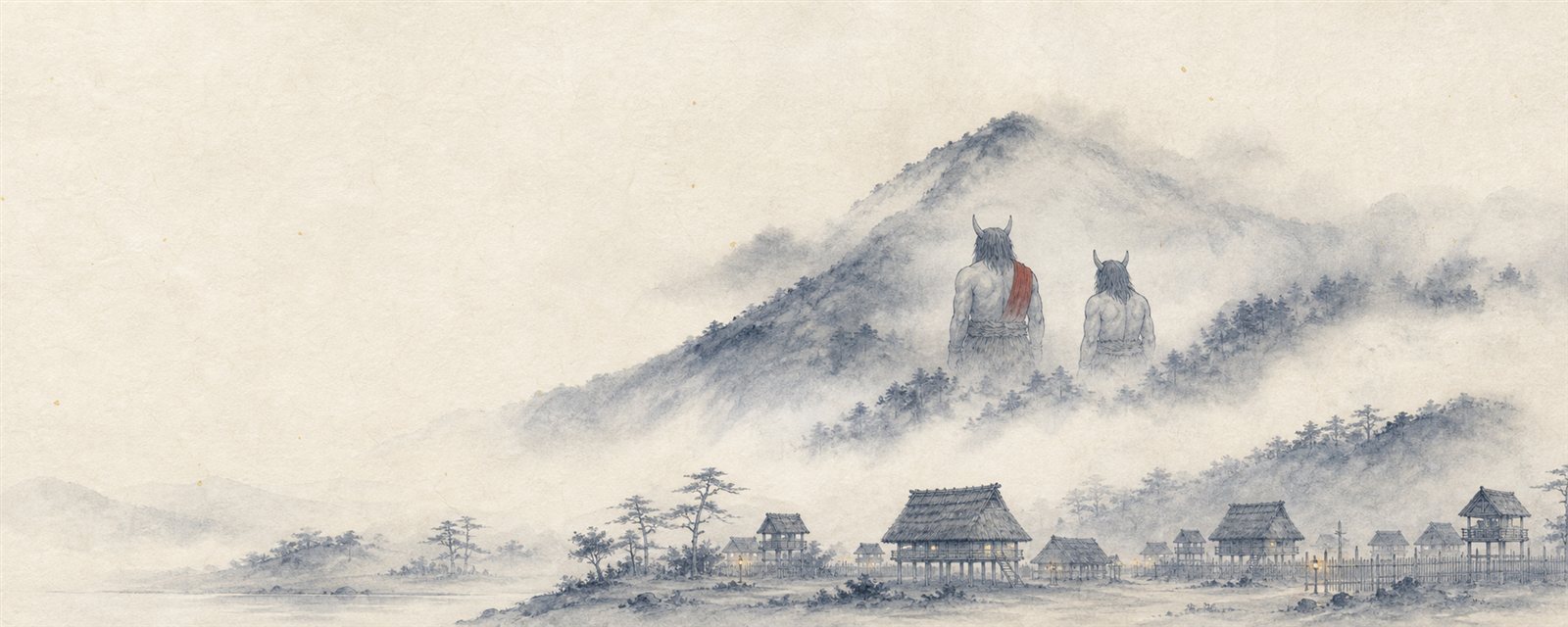
Long, long ago. In the land of Hōki there was a mountain called Mt. Kizumi. On that mountain lived two ogres. The elder was named Ōushikani, the younger Otoushikani. Night after night the ogres came down to the villages and tormented the people.
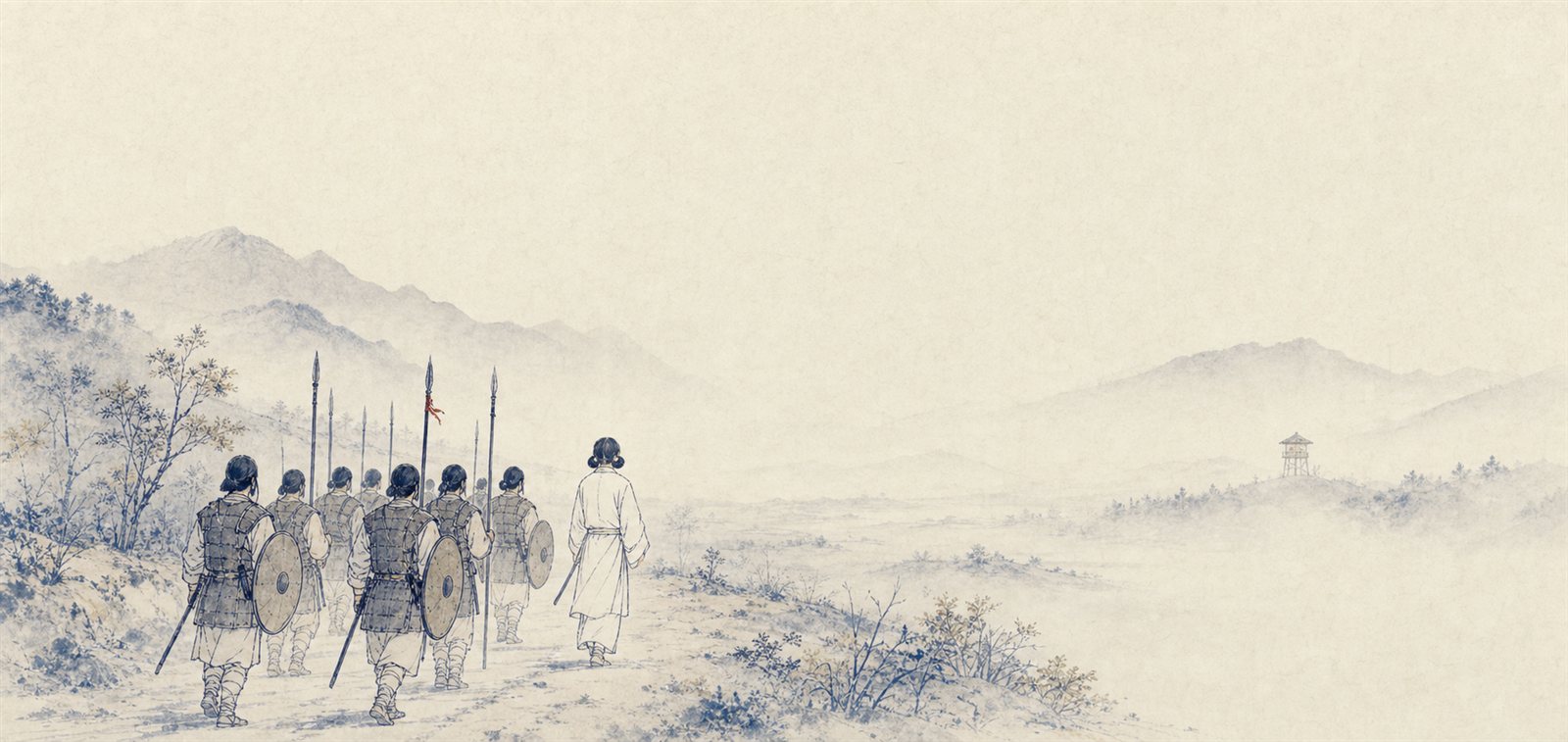
The sovereign — Emperor Kōrei — came down all the way from Yamato to this land to quell the ogres. But the ogres holed up deep in the mountain and would not show themselves.
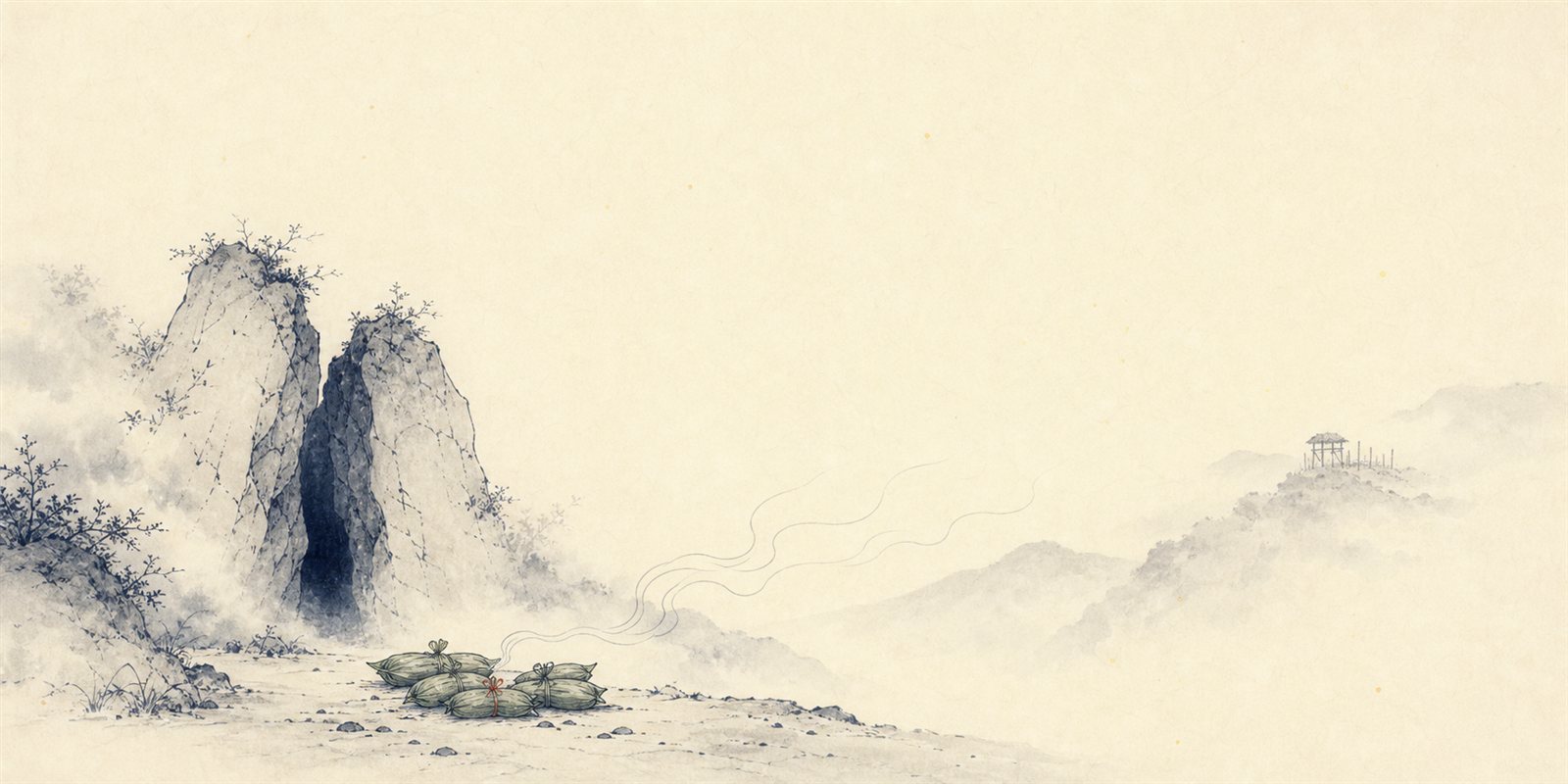
So the emperor devised a scheme. He had dumplings wrapped in bamboo leaves placed at the mountain’s mouth. Their savory smell drifted down the valley and tickled the ogres’ noses.
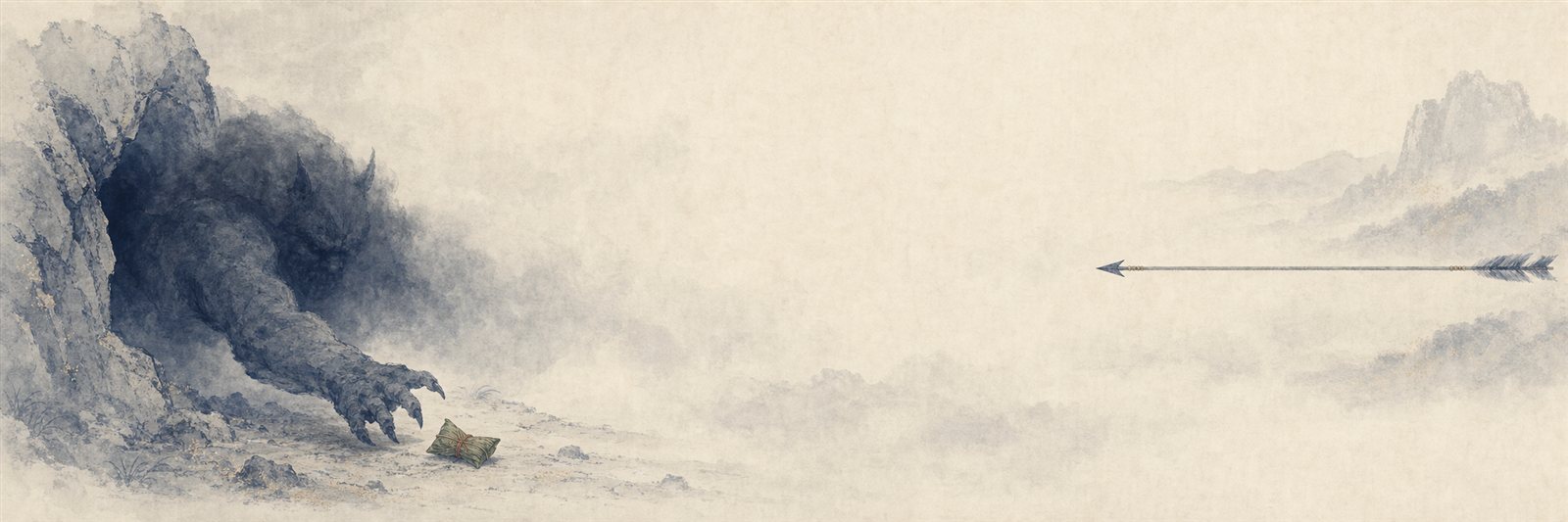
Unable to resist, the younger ogre Otoushikani crawled out. In that instant, a single note of a bowstring. — The younger ogre fell.
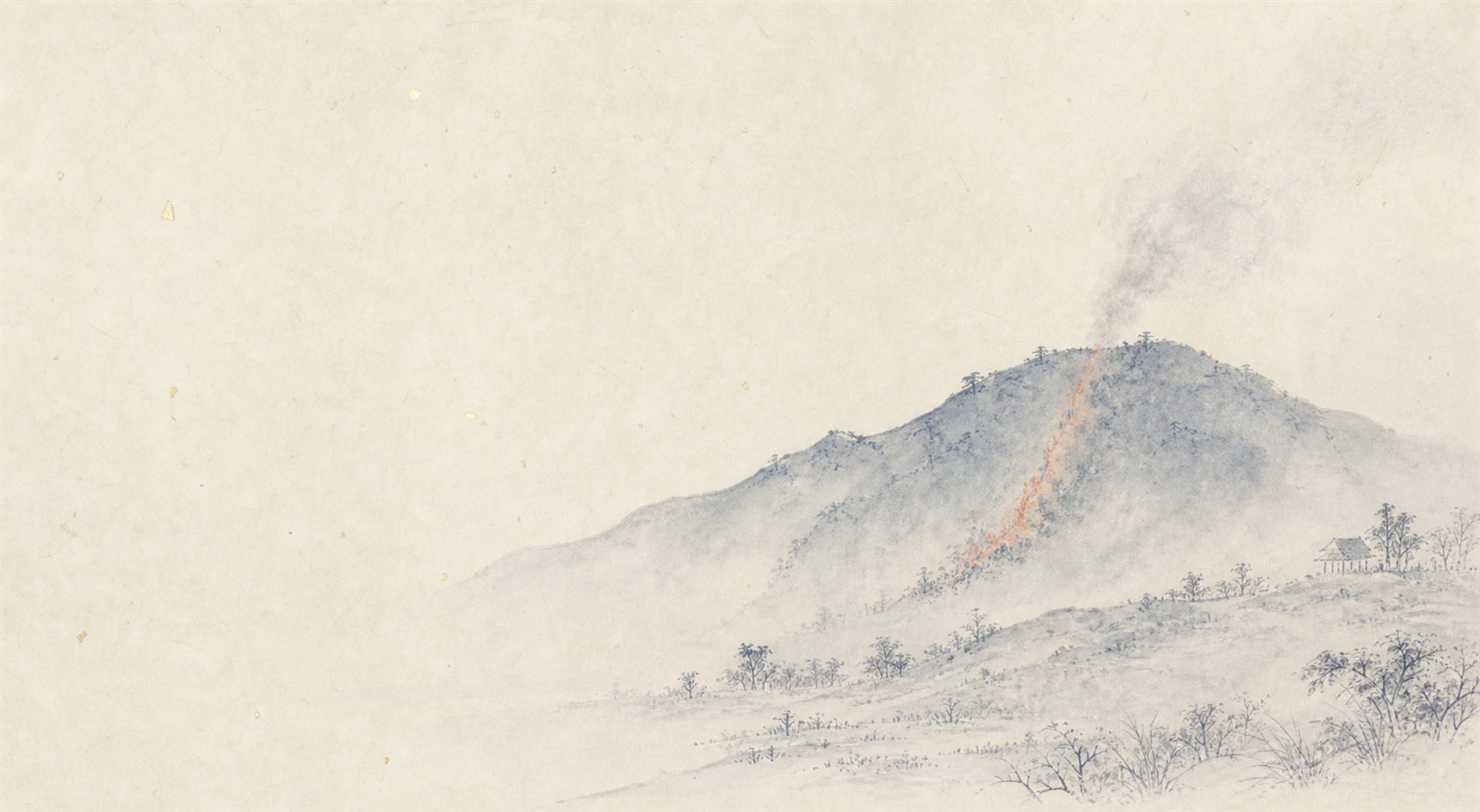
The elder ogre Ōushikani remained. The emperor’s troops set the mountain ablaze. The dry bamboo flared up, and Mt. Kizumi was wrapped in flames.
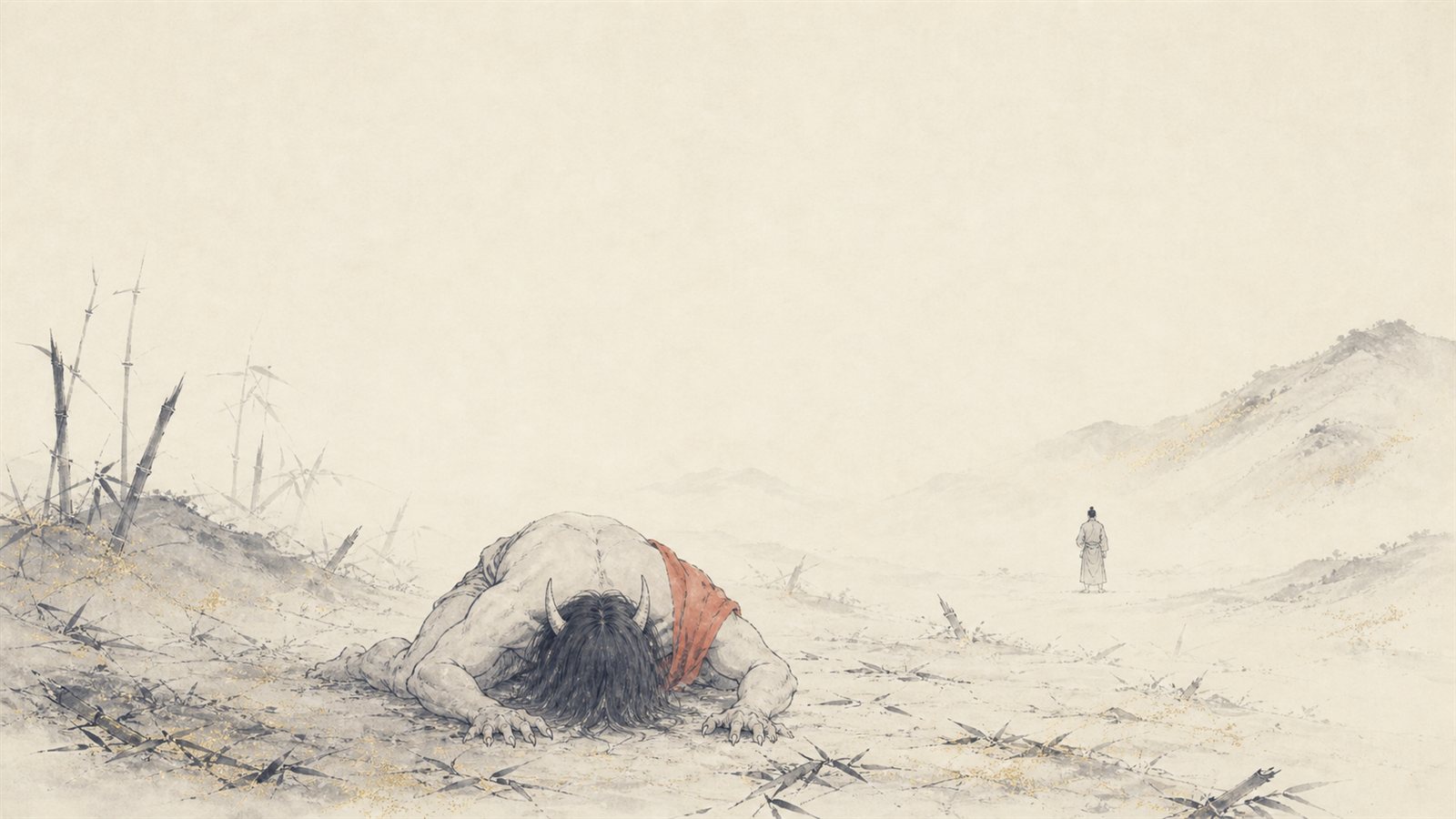
With nowhere left to flee, Ōushikani crawled along the ground like a crab, bowed his head, and said: “I surrender. From now on, let me guard your north.”
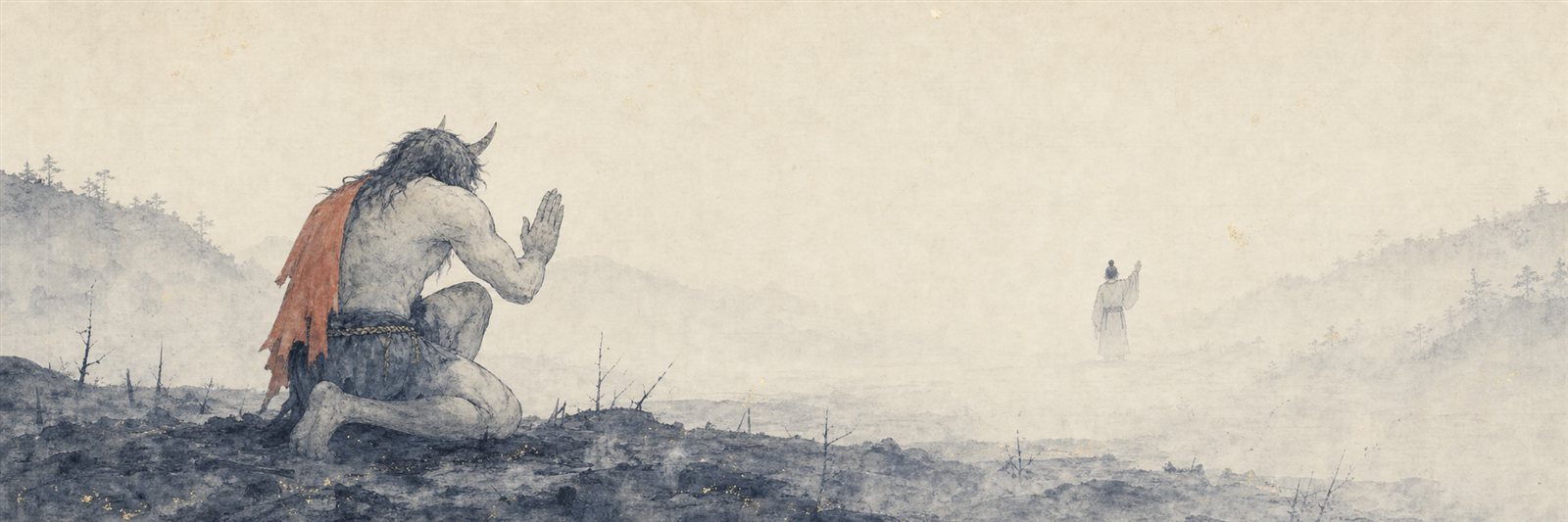
The emperor did not strike him down. “Very well. With that strength of yours, guard the north.” — The ogre was not destroyed; he became a guardian of the north.
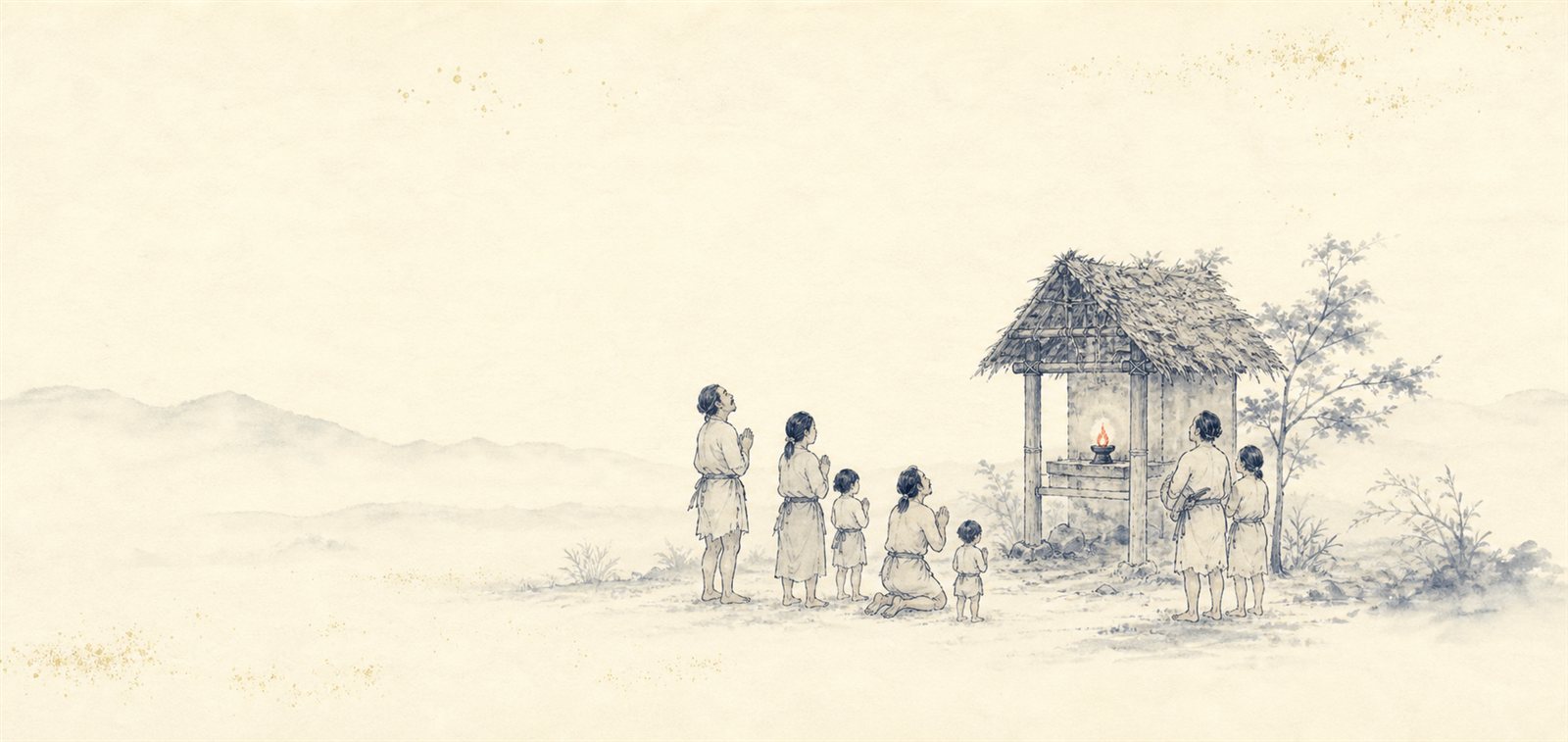
The villagers rejoiced and built a simple shrine roofed with bamboo leaves. This, they say, is the beginning of Sasafuku Shrine.
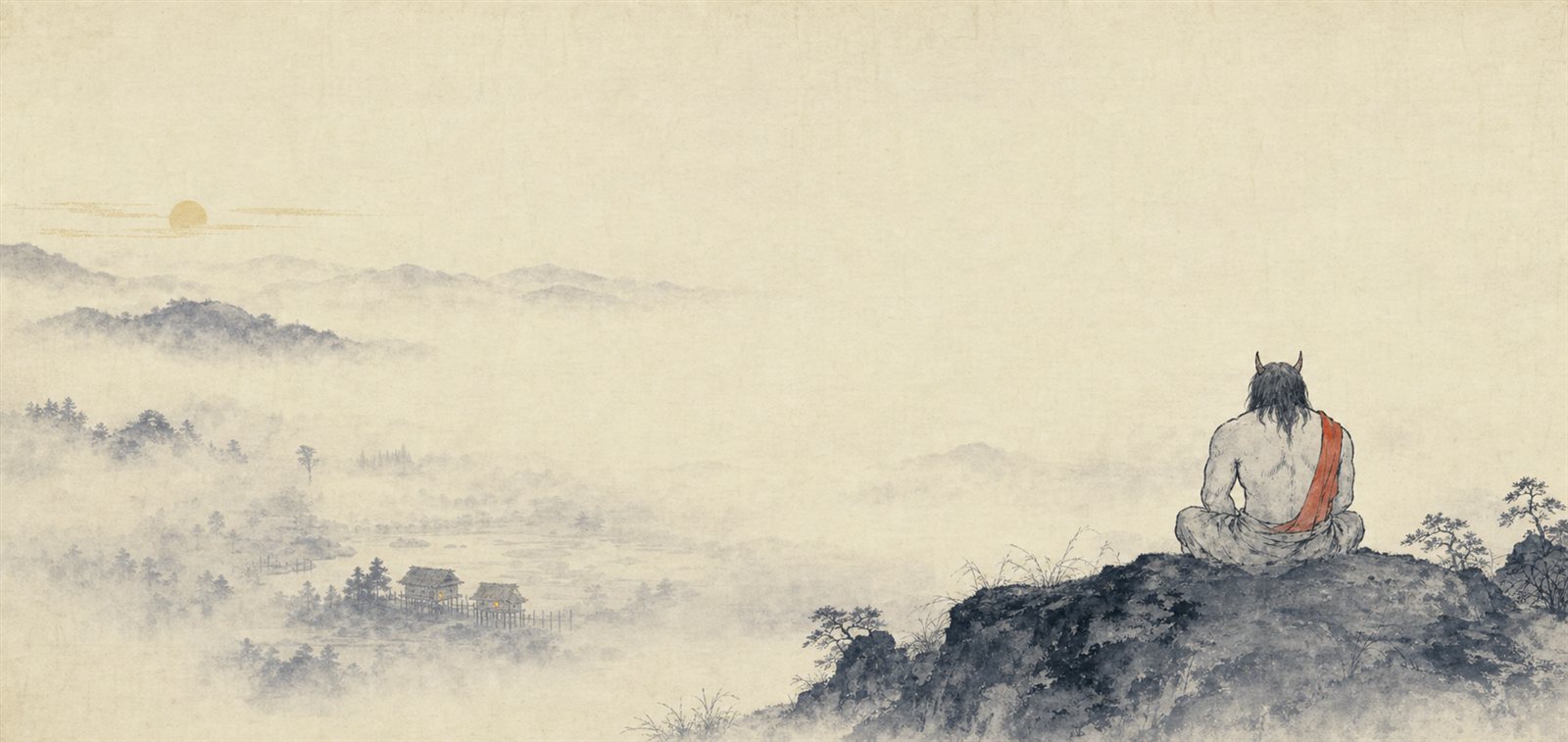
And the ogre, even now, looks down over the northern valley.
—This is one of the three tales handed down at Mt. Kizumi.
From here, the sources
I already wrote the outline of the ogre-slaying, so here I’ll trace where the kamishibai’s “ending” came from.
The brothers’ fates were not the same
The younger brother, Otoushikani, is shot down with an arrow the moment he comes out, lured by the bamboo-wrapped dumplings. No mercy.
So what became of the elder brother, Ōushikani? After he was beaten by the bamboo-fire assault, the shrine’s origin record tells it like this. He crawled along the ground like a crab and begged for his life: “I surrender. From now on I will become your subject, and let me guard the north.” Emperor Kōrei’s answer — “Very well, guard the north with that strength of yours.”
The ogre was forgiven. And instead of being destroyed, he came to guard the land of the north. Just what this “north” points to, we’ll consider in the final walking-the-mountain installment, together with the direction the ogre statues still face today. The shrine the joyful villagers built, roofed with bamboo leaves, is said to be the beginning of Sasafuku Shrine.
The real reason ogres are displayed in town
Honestly, this is the thing that took me most aback when I moved here. The first time I saw the giant ogre statue at Onikko Land, I thought, “Wait — wasn’t the ogre the villain that got slain?” And yet they line Onimori Bridge, and there’s even one in the station restroom. To an outsider’s eye, it’s quite a strange sight.
Once you know the ending, the way it looks changes. The ogres of this town do not end as villains. They surrendered, were forgiven, and promised to guard the north. So the ogre statues all over town aren’t on display in disgrace — they’re at their posts.
Look at the name “Onimori Bridge” (the Ogre-Guard Bridge). Does it guard the ogre, or does the ogre guard it? Read either way, the slaying story can’t explain it. And this name — you might think it’s a recent invention of the town’s revitalization, but it already appears in the 1926 Hino-gun-shi. The idea of an ogre as guardian has been in this land for at least a hundred years.
Where this tale survived
One honest footnote. The brothers’ names and the dumpling scene themselves were, as I wrote last time, content thought to have been in the lost first half of the engi. In place of the vanished document, the shrine’s origin record, the Edo-period gazetteer Hōki Mindan-ki (which records the ogre’s mound where the slain ogre was buried), and oral tradition carried this story down to today.
The town’s official kamishibai, “The Tale of Mt. Kizumi,” ends with “the ogre was reformed and made into a guardian ogre” — a gentle retelling of this origin record’s ending for children. It faithfully carries the core of the tradition forward.
A word from the rabbit: An ogre who can say “let me guard the north” all on his own — isn’t that rather admirable? Me, I’d request the warm south.
References:
- The origin lore of Sasafuku Shrine (japanmystery, “Sasafuku Shrine”, among others)
- Hino-gun-shi, vol. 2 (1926) — the entry on Onimori Bridge, National Diet Library Digital Collection (frame 496); the entry on the ogre’s mound (cited from Hōki Mindan-ki, vol. 1, frames 65–66)
- Hōki Town official, “Kamishibai: The Tale of Mt. Kizumi”
- ※ The traditional portions are “as handed down.” Emperor Kōrei is an emperor of an era whose historicity is debated; please read this not as historical fact but as a story the land has passed down.
- ※ All kamishibai illustrations are AI-generated (made as images of the traditional scenes).